
Protease Inhibitors and Phosphatase Inhibitors

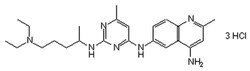
MilliporeSigma™ Calbiochem™ Rac1 Inhibitor
Rac1 Inhibitor, CAS 1177865-17-6, is a cell-permeable, reversible inhibitor of Rac1 GDP/GTP exchange. Interferes with the interaction between Rac1 and Rac-specific GEFs Trio and Tiam1 (IC50 ≈50 μM).

MilliporeSigma™ Calbiochem™ Bexarotene
A retinoid X receptor (RXR) agonist that can permeate the blood-brain barrier and rapidly reduce Aβ40 and Aβ42 levels in APP/PS1 mice in an ApoE-dependent manner.

MilliporeSigma™ Calbiochem™ InSolution™ LY 294002
InSolution™ LY 294002, CAS 154447-36-6, is a 10mm solution of LY 294002 (Cat. No. 440202) in DMSO. A cell-permeable, potent, reversible and specific inhibitor of PI 3-kinase (IC50 = 1.4μM).
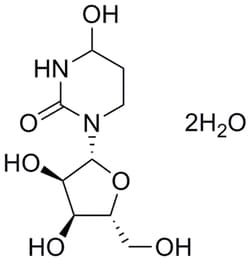
MilliporeSigma™ Calbiochem™ InSolution™ Tetrahydrouridine
Tetrahydrouridine is a potent competitive inhibitor of cytidine deaminase.
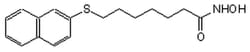
MilliporeSigma™ Calbiochem™ Histone Deacetylase Inhibitor VI, HNHA
The Histone Deacetylase Inhibitor VI, HNHA, also referenced under CAS 926908-04-5, controls the biological activity of Histone Deacetylase.
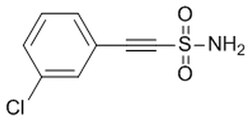
MilliporeSigma™ Calbiochem™ HSP70 Inhibitor, PES-Cl
Directly binds to HSP70 and disrupts its interaction with client proteins..
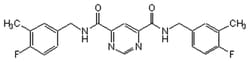
MilliporeSigma™ Calbiochem™ MMP-13 Inhibitor
The MMP-13 Inhibitor, also referenced under CAS 544678-85-5, controls the biological activity of MMP-13. This small molecule/inhibitor is primarily used for Protease Inhibitors applications.

MilliporeSigma™ Calbiochem™ LYP Inhibitor II, LTV-1
The LYP Inhibitor II, LTV-1 controls the biological activity of LYP. This small molecule/inhibitor is primarily used for Phosphorylation & Dephosphorylation applications.
MilliporeSigma™ Calbiochem™ Amyloid Precursor Protein β-Secretase Inhibitor
The Amyloid Precursor Protein β-Secretase Inhibitor controls the biological activity of Amyloid Precursor Protein β-Secretase. This small molecule/inhibitor is primarily used for Neuroscience applications.
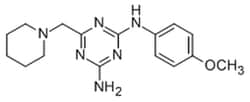
MilliporeSigma™ Calbiochem™ ETV1 Inhibitor, BRD32048
Cell-permeable, reversibly binds to ETV1 (KD = 17.1 μM) and reduces its transcriptional activity, independent of its binding to DNA.
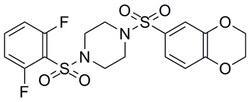
MilliporeSigma™ Calbiochem™ PKM2 Activator II, DASA
The PKM2 Activator II, DASA modulates the biological activity of PKM2. This small molecule/inhibitor is primarily used for Biochemicals applications.
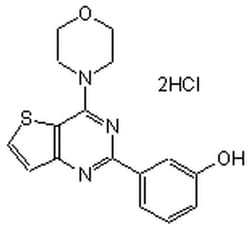
MilliporeSigma™ Calbiochem™ PI 3-Kα Inhibitor IV
The PI 3-Kα Inhibitor IV, also referenced under CAS 1188890-32-5, controls the biological activity of PI 3-Kα. This small molecule/inhibitor is primarily used for Phosphorylation & Dephosphorylation applications.

MilliporeSigma™ Calbiochem™ Indirubin-3'-monoxime
A potent, reversible, and ATP-compatible inhibitor of GSK-3β (glycogen synthase kinase 3β), Cdk1 (cyclin-dependent kinase1) and Cdk5 (IC50 = 22 nM, 180 nM, and 100 nM, respectively).
MilliporeSigma™ Calbiochem™ GTS-21 Dihydrochloride (DMBX-A)
A partial agonist selective for α7 nAChRs (EC50 = 10
MilliporeSigma™ Calbiochem™ p75NTR Signaling Inhibitor, Cell-permeable, TAT-Pep5
The p75NTR Signaling Inhibitor, Cell-permeable, TAT-Pep5 controls the biological activity of p75NTR. This small molecule/inhibitor is primarily used for Neuroscience applications.